
Winter Construction Challenges and How Mobile Office Trailers Can Help
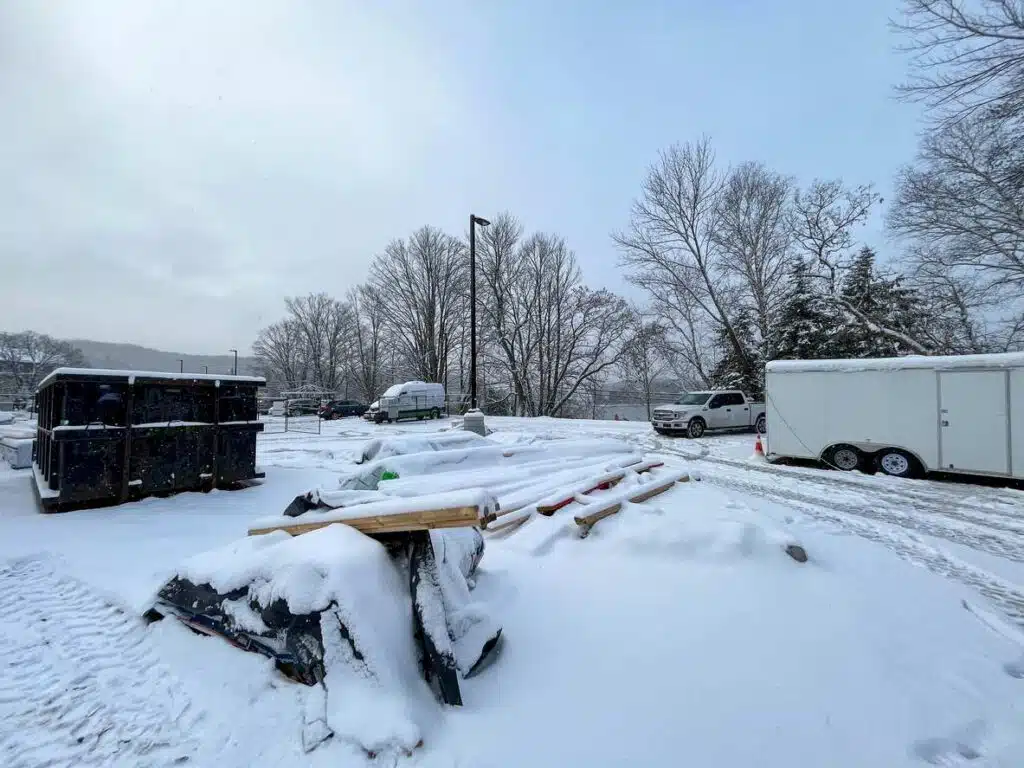
Every fall, construction managers face the same decision: push through winter or scale back and hope to catch up in the spring. It’s rarely a clean choice. Frozen ground, cold-stressed crews, shortened daylight hours, and unpredictable weather don’t just slow work down, they compound. A crew that can’t warm up properly makes more mistakes. Equipment stored outside degrades. Plans that should take 20 minutes to review stretch into an hour when there’s nowhere warm to sit down.
Mobile office trailers don’t solve winter weather. But they do solve the operational problems winter creates on a job site, and the difference between a site with a properly equipped office and one without it shows up quickly once temperatures drop.
How Mobile Office Trailers Can Help With Winter Construction
Despite what the myths about mobile offices may say, these trailers are very important for winter construction projects. They help in the following ways.
1. Keeping Crews Warm and in a Comfortable Workspace
Cold stress is one of the most underestimated risks on a winter job site. It doesn’t just affect worker health, it affects judgment, dexterity, and focus. Workers who can’t take regular breaks in a warm environment make more errors, work more slowly, and are at higher risk for cold-related injuries like frostbite and hypothermia.
A mobile office trailer gives crews a dedicated warm space to rotate through during breaks, review plans, and handle any administrative work without standing in the elements. Satellite Shelters’ trailers run on electric HVAC systems, which maintain a consistent interior temperature regardless of outdoor conditions. For sites in particularly cold climates, skirting is worth adding to your order. Skirting wraps the underside of the trailer, preventing cold air from circulating beneath the unit and adding a meaningful layer of insulation.
If your trailer includes plumbing, polar skirting is the right call, as it helps protect water lines from freezing in sub-zero temperatures.
2. Warm storage for Documents, Equipment, and Materials
Moisture is the enemy of a winter job site. Snow, ice melt, and condensation can damage blueprints, electronics, tools, and any materials left exposed. Once a document is water-damaged or a laptop has cycled through too many freeze-thaw swings, those aren’t problems you recover from cheaply.
A mobile office trailer provides a climate-controlled, dry environment specifically for the things that can’t get wet. Plans stay flat and legible. Laptops and tablets stay at a stable temperature. Tools and small equipment that would degrade in an unheated storage container can be kept in working order. Most trailers include built-in desks with file storage, so organization doesn’t require additional setup, as the infrastructure is already there on delivery.
For sites that also need to protect bulk materials or larger equipment, a steel storage container alongside the office trailer is a common pairing. The two units cover different needs: the office handles documents, electronics, and personnel; the container handles materials that just need to stay dry and secure.
3. Managing Shorter Days and Tighter Schedules
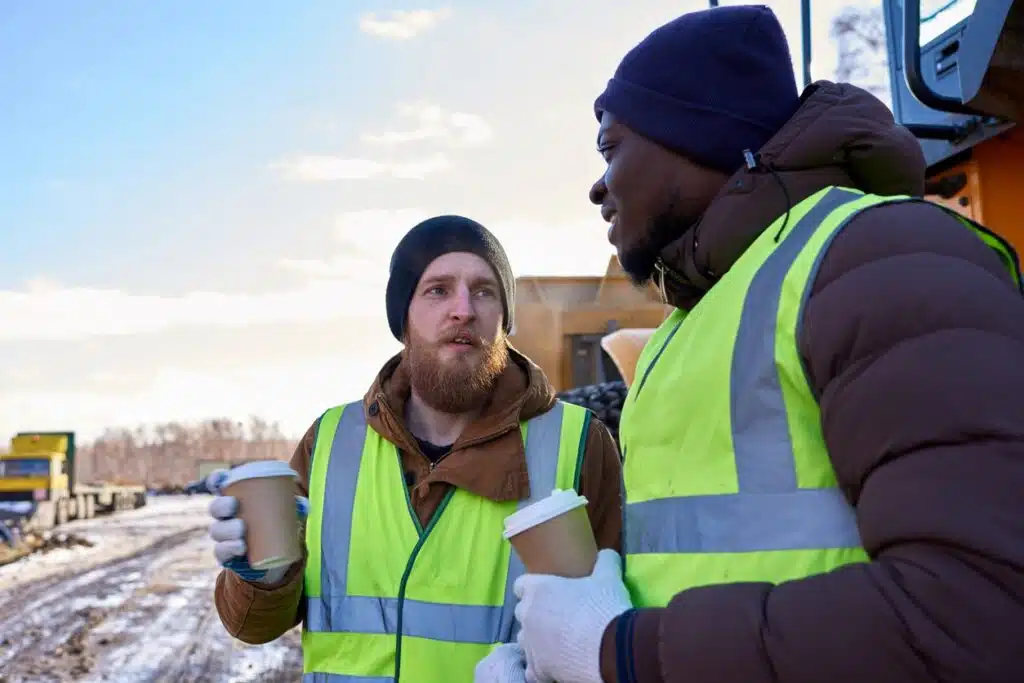
Daylight hours shrink significantly in winter, particularly in northern markets. A site that had 14 hours of usable daylight in July might be working with fewer than 9 in December. That compression means planning, scheduling, and coordination have to be tighter, not looser, than the rest of the year.
Having a dedicated on-site office space makes that tighter coordination possible. Managers can hold morning briefings before crews go out, review progress at midday without pulling people off site, and close out the day with documentation that keeps the project on track. When the workspace for that coordination is a warm, organized trailer rather than the cab of a truck or a phone call from the parking lot, the quality of those decisions improves.
Built-in lighting in every Satellite trailer means the office is fully functional from before dawn to after dusk, and it doesn’t depend on daylight the way outdoor work does.
4. Why Some Teams Treat Winter as an Advantage
There’s a real case to be made that winter is the best time to get ahead on a project, not despite the challenges, but because of how other teams respond to them.
Permitting offices are less backlogged in winter. Material lead times tend to shorten when overall construction activity slows. Subcontractors who are fully booked from April through October often have more availability between November and February. If your team is equipped to work through winter while competitors scale back, you’re not just maintaining progress, you’re gaining ground.
The teams that take advantage of this are typically the ones with the infrastructure to keep working comfortably. A site with a properly set-up mobile office trailer, adequate warm break space, and organized on-site management can maintain a pace that an under-equipped site simply can’t match when temperatures drop.
Take Advantage of All-Season Construction With Satellite Shelters’ Mobile Office Trailers
Winter doesn’t have to mean lost time. With the right site setup, most of the operational challenges that slow construction teams down in cold weather are manageable, and a mobile office trailer is one of the most direct ways to address several of them at once.
Delivery and installation timelines are more predictable in the fall than they are once winter weather is actively affecting logistics, and having the trailer on site before temperatures drop means your crew isn’t scrambling to adapt mid-project. Ready to get your site set up before winter hits? Browse our mobile office trailers or contact your local Satellite branch to talk through what your site needs..