
Modular Building Construction: A 5-Step Guide
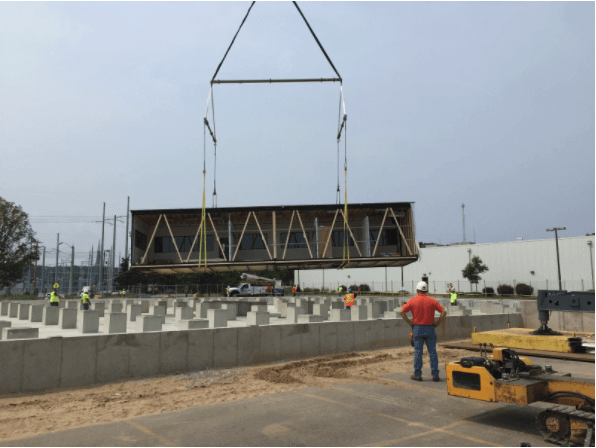
Modular building construction is a method in which a structure is manufactured in individual sections, called modules, inside a controlled factory environment, then transported and assembled on a prepared site. Because site preparation and module fabrication happen simultaneously, modular construction typically completes 30–50% faster than traditional building methods, with less material waste and tighter quality control at every stage, as documented by the Modular Building Institute, the leading trade association for the modular construction industry.
Whether you need a temporary field office, a permanent administrative building, or flexible classroom space, understanding the modular building construction process helps you plan your project timeline, budget, and site requirements with confidence. At Satellite Shelters, we’ve managed thousands of modular building projects across industries, including construction, energy, health care, and education. Here’s exactly what to expect, step by step.
What Is Modular Construction? (And How Is It Different from Traditional Building?)
Before walking through the process, it helps to understand what sets modular construction apart.
In traditional construction, a building is assembled entirely on-site in sequential phases where foundation is first, then framing, then mechanicals, then finishes. Each phase depends on the one before it, which means weather delays, subcontractor scheduling, and site conditions can cascade into significant timeline overruns.
In modular construction, those phases happen in parallel. While your site is being prepared, your building’s modules are being fabricated indoors under controlled conditions. The result is a faster overall schedule, more predictable costs, and a quality-controlled build that meets the same local and national building codes as any traditional structure.
| Factor | Modular Construction | Traditional Construction |
|---|---|---|
| Timeline | 30–50% faster | Sequential — each phase depends on the last |
| Weather dependency | Minimal — factory-built | High — outdoor work exposed to delays |
| Quality control | Factory-inspected at each stage | On-site variability |
| Cost predictability | High — fixed-price factory process | Lower — on-site changes are common |
| Flexibility | Relocatable or permanent | Permanent only |
| Waste | Significantly reduced | High material waste typical |
For a deeper look at which approach fits your project, read our guide on modular vs. traditional construction.
The 5-Step Modular Building Construction Process
Step 1: Design, Planning, and Factory Fabrication
The modular building construction process begins in the design phase, where your project requirements, such as team size, intended use, timeline, and site conditions, are translated into detailed building specifications. At Satellite Shelters, our modular building design team works with you to determine the right configuration, layout, and finish level for your needs.
Once the design is finalized, fabrication begins in a factory-controlled environment. This is one of the most significant advantages of modular construction: your building is assembled indoors, away from weather, by a trained crew using standardized processes and materials.
This phase typically takes two to six weeks, depending on the size and complexity of your building. Because fabrication happens in parallel with site work (see Step 2), you’re not waiting for one to finish before the other starts.
Not sure what size or configuration fits your team? Use our Interactive Building Gallery to explore options by square footage and layout.
Step 2: Site Preparation and Foundation Work
While your modules are being built at the factory, a separate crew is simultaneously preparing your site. This is what makes the modular process so efficient, with two workstreams running in parallel, coordinated to hit the same delivery window.
Site preparation typically includes:
- Site survey and grading — leveling and clearing the area where the building will be placed
- Utility connections — running electrical, plumbing, HVAC, and data lines to the point of connection
- Foundation work — installing footings, piers, or a slab, depending on your building type and local codes
- Access route preparation — ensuring delivery vehicles can safely reach the placement area
Both the factory crew and the site crew maintain constant communication to ensure the building and the site are ready at the same time. This coordination is critical, as a module arriving before the site is ready, or a site that sits idle while fabrication runs long, both add unnecessary cost.
For tips on getting your location ready before delivery day, read our guide on how to prep your job site before mobile office delivery.
Step 3: Delivery and Module Assembly
With site work complete and modules fabricated, it’s time for delivery and assembly, which is the most visible phase of the modular construction process. Individual sections are transported to your site by flatbed truck and placed using a crane or other lifting equipment.
This is the stage where your building begins to take shape quickly. Depending on the number of modules, placement can often be completed in a single day or over the course of a few days. Once sections are set on the foundation, crews connect and seal the module joints, align mechanical and electrical systems across sections, and anchor the structure to the foundation.
The speed of this phase often surprises people who are used to traditional construction timelines. What would take weeks of on-site framing in a conventional build is compressed into days during a modular assembly without sacrificing structural integrity.
Step 4: Interior, Exterior, and Utility Finishes
Once the modules are assembled and joined on-site, the finishing phase begins. This is where your building transforms from a delivered structure into a move-in-ready workspace.
Interior finishing work typically includes:
- Painting and wall finishing
- Flooring installation (carpet, vinyl, tile)
- Ceiling completion
- Furniture delivery and setup — explore our ready-to-go furniture packages for a fast, fully equipped option
- Final utility tie-ins (electrical panels, plumbing connections, HVAC startup)
At the same time, exterior finishing and any required landscaping or site work is completed. Steps and entry platforms are installed, exterior trim and skirting are finished, and the building is prepared for inspection.
If you’re customizing your building with specific features, such as additional private offices, restroom facilities, or specialty configurations, those are finalized during this phase as well. See our modular building products page for standard and custom configuration options.
Step 5: Inspection, Handover, and Move-In
The final step in the modular building construction process is inspection and handover. Before keys are transferred, the building undergoes any required local building inspections to confirm it meets applicable codes and regulations. Because modular buildings are factory-built under controlled conditions and inspected throughout fabrication, and are required to meet International Building Code standards and applicable local regulations, this phase typically goes smoothly.
Once inspections are passed, your project manager walks you through the building, confirms all systems are operational, and transfers ownership and documentation such as warranties, maintenance guidelines, and contact information for ongoing service.
From there, it’s time to move in. Your team can be up and running in a fully functional, code-compliant building in a fraction of the time it would take through traditional construction.
When you’re ready to start planning, find your nearest Satellite Shelters location or request a free quote.
How To Choose the Right Modular Building for Your Construction Site
Knowing the process is one thing. Choosing the right modular solution for your specific project is another. Here are the key factors to evaluate before you order:
Team size and headcount. The most direct factor in choosing a building size. As a general rule: 8×20 and 8×24 units work for very small crews (2–4 people), 10×40 and 10×50 units work for small to mid-size teams, and 24×60 or larger modular buildings accommodate larger administrative operations. Use our size guide to match square footage to headcount.
Project duration. Short-term projects (under 12 months) are well-suited to rental. Longer-term or permanent needs may make purchasing more cost-effective. Satellite Shelters offers both, so see our guide on whether to buy or rent a modular building.
Site access and terrain. Delivery vehicles need adequate road access and clearance. Soft or uneven terrain may require additional site prep. Discuss site conditions with your project team early, as surprises here are the most common source of delivery delays.
Temporary vs. permanent use. Modular buildings can be designed for relocation and reuse, or built to serve as permanent structures. If you anticipate needing to move the building to another phase of a project or to a different location entirely, make sure your configuration supports that from the start.
Customization needs. Beyond standard layouts, Satellite Shelters offers custom modular office configurations, restroom-equipped units, specialty finishes, and S-Plex expandable modular buildings for projects that require scalable, interconnected space.
Frequently Asked Questions About the Modular Building Construction Process
The modular building construction process involves manufacturing individual building sections (modules) in a factory-controlled environment, then delivering and assembling them on a prepared site. The process follows five stages: design and factory fabrication, site preparation, delivery and assembly, interior and exterior finishing, and final inspection and handover. Because fabrication and site work happen simultaneously, modular construction is significantly faster than traditional building.
Timeline varies by project size and complexity, but most modular builds are completed 30–50% faster than equivalent traditional construction. A standard single-module office unit can be delivered and installed within a few weeks of order. Larger, multi-module configurations typically take six to twelve weeks from design approval to move-in.
Traditional construction builds on-site in sequential phases — each stage depends on the previous one, making the process vulnerable to weather delays, labor scheduling, and on-site variability. Modular construction fabricates building sections in a factory while site preparation happens simultaneously, reducing the total project timeline, minimizing waste, and applying consistent quality control throughout.
Yes. Modular buildings can be designed for permanent, long-term, or temporary use. They are built to meet the same local and national building codes as traditionally constructed buildings and can be fully customized for permanent occupancy. Many organizations use modular buildings as permanent offices, health care facilities, classrooms, and administrative centers.
The most important factors are team headcount, project duration, and intended use. Satellite Shelters’ Interactive Building Gallery and size guide walks you through options by square footage and layout. You can also request a free quote and a Satellite Shelters representative will help match the right solution to your project.
Modular construction is generally more cost-effective than traditional building for equivalent space, primarily due to reduced labor time, less material waste, and more predictable project costs. The exact savings depend on project scope, location, and configuration. Rental options are available for temporary needs, which further reduces upfront cost.
Modular buildings are used across a wide range of industries including construction, energy and utilities, health care and biosciences, education and government, manufacturing, industrial operations, and aerospace and aviation.
Start Your Modular Building Project With Satellite Shelters
Whether you’re managing a construction site, expanding a school district, or setting up a field office for an energy project, Satellite Shelters has the experience and fleet to get you into the right building quickly. With locations across the country, we provide local delivery, installation, and service — backed by decades of modular construction expertise.
Request a free quote from your local Satellite Shelters branch, and our team will help you find the right modular building solution for your project.
Related reading:
- What to Expect from the Modular Building Design Process
- Should You Choose Modular or Traditional Construction?
- How to Determine What Modular Solution Is Right for Your Project
- Guide to the Modular Building Construction Process (extended version)
Satellite Shelters — The First In Space℠