
The History of Modular Construction
Modular building construction may seem like a newer way to construct buildings, but it actually has a long and storied history. Ever since factories became commonplace, architects and builders have sought to utilize their potential to create high-quality prefabricated buildings.
Take a journey with Satellite Shelters to find out how modular construction evolved into the game-changing industry it is today!
Early History of Prefabrication
The idea of modular buildings constructed from prefabricated materials and parts has been around for a few thousand years. Roman armies carried their forts in prefabricated sections for easy installation once they arrived at their destination, and since then modular construction has only grown.
The First Prefabricated Structures
The first prefabricated house is widely recognized to be a wood panel fishing house shipped from England to Massachusetts across the Atlantic Ocean in the 1600s. In the 1800s, the Brits continued shipping pre-made houses to their colonies and were responsible for the Australian portable cottage.
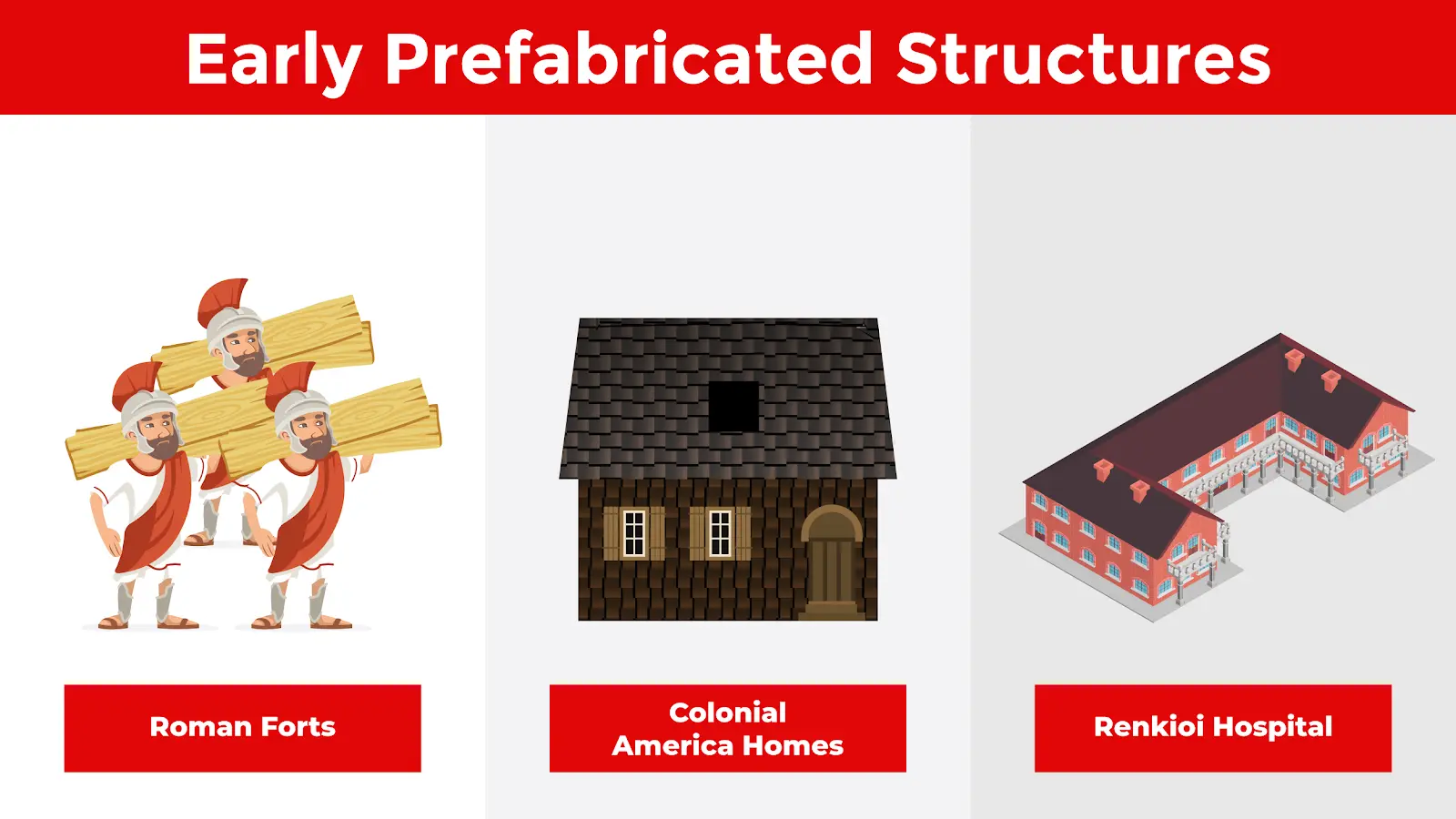
The concept of prefabricated buildings that weren’t simple homes got off the ground in the 1800s, too. Famed architect Isambard Kingdom Brunel designed the fully prefabricated Renkioi Hospital at the height of the Crimean War in 1855, an idea way ahead of its time. The hospital was designed and its modules constructed and shipped within five months.
Sears Kit Homes: Houses in a Box
The first true catalyst for modern modular construction happened shortly after the turn of the 20th century. Starting in 1908, Sears, Roebuck, and Co. sold prefabricated houses through its Sears Modern Home program. The concept was simple: Order one of the ~400 house plans from the catalog and receive it in easy-to-construct sections. All you had to do was provide a plot of land and labor.
These kit homes granted homeownership—and the upward mobility it afforded—to anybody with a catalog and the required cash. It was particularly important to both World War I veterans coming home from the war and African Americans seeking homeownership during Jim Crow laws.
Most importantly, the Sears Modern Home program showed the benefits of modular construction to America at large. Prefab modular buildings take less time to build and are more affordable than traditional construction, and Americans bought approximately 75,000 made-to-order houses from Sears between 1908 through 1940.
The Postwar Housing and Construction Boom
After World War II, America saw the return of millions of military personnel, many of whom sought to start families and begin their postwar life with loved ones. Such a population boom required an immense number of houses, and such housing could only be supplied through prefabricated, modular construction.
About 30 miles east of Manhattan, William Levitt and his real estate company designed a planned community that became the model for American suburbia: Levittown, New York. Levitt leaned heavily on prefabricated house sections to accomplish affordable and mass-produced housing at the rate that was needed. The first Levittown house cost a tick under $7,000—about $80,000 in 2019 dollars—and Levitt’s company constructed an astonishing 12 per day between 1947 and 1951.
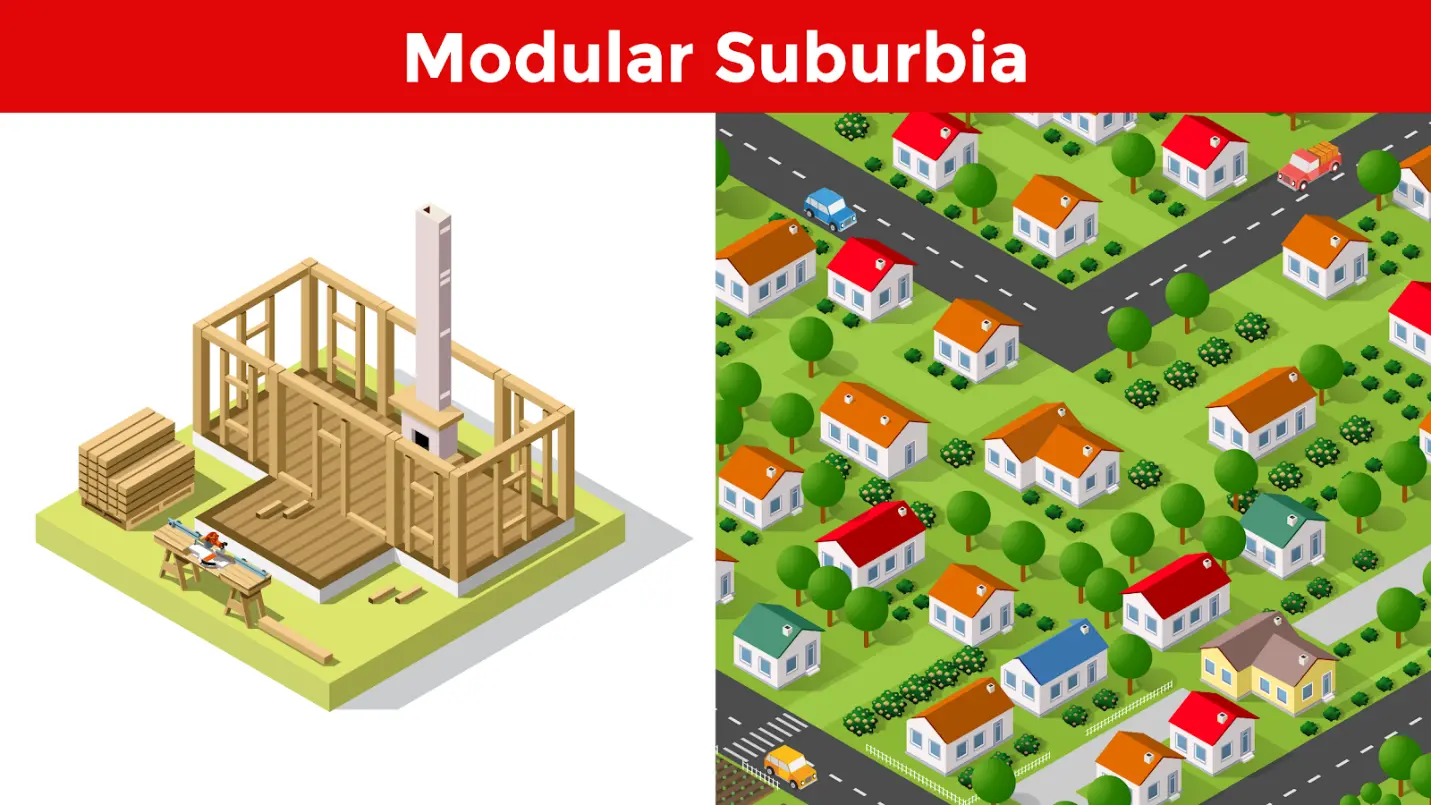
However, it wasn’t just housing that enjoyed a postwar boom. Modular buildings were rapidly becoming a more common choice for businesses, too.
What This History Means for Your Project Today
The throughline from Roman prefabricated forts to Sears catalog homes to Levittown is always the same: when speed, cost, and flexibility matter most, modular construction wins. That hasn’t changed. What has changed is how precise, customizable, and accessible modular buildings have become.
Today’s modular buildings aren’t a compromise. They’re a deliberate choice. Whether you need a single temporary office on a job site for three months or a multi-unit complex that serves as a semi-permanent headquarters for a multi-year project, the same principles that made prefab construction revolutionary in the 19th century are working in your favor right now: faster delivery, lower cost than traditional construction, and the ability to scale up or pack up as your needs change.
The industries that have always benefited most from modular construction, including construction, education, healthcare, and energy, are still the core users today. But the solutions available to them have evolved considerably. A foreman managing a remote job site in 2025 has access to a fully equipped, climate-controlled office trailer that can be delivered, set up, and ready to occupy in a matter of days. A growing company that needs 5,000 square feet of temporary office space during a facility renovation doesn’t have to wait months for traditional construction. They can configure it from modular units and move in almost immediately.
How Satellite Shelters Fits Into That Story
Satellite Shelters has been part of the modular industry since 1972, which means we’ve grown alongside the same evolution described in this post. Over that time, we’ve watched modular construction move from a niche solution to a mainstream one, and we’ve built our product line to reflect where the industry is now.
Today, we offer three primary solutions that span the full range of temporary and semi-permanent space needs:
- Mobile office trailers, available in six standard sizes from 8×24 to 24×60, are the go-to for job site offices, temporary headquarters, and short-term projects. They deliver fast, set up fast, and come equipped with what you need to work on day one.
- S-Plex modular buildings are built from combinable modules using three floor plan configurations, making them well suited for projects that need more space or longer-term flexibility. You can start with what you need and expand as the project grows, without starting over.
- Ground-level offices are container-based offices that sit flush with the ground, ideal for sites with tight access, security checkpoints, or crews that need step-free entry.
All of our products are available to rent, lease, or buy, and every order is handled by a local branch expert, not a call center. That local knowledge matters more than it might seem: site prep requirements, permit processes, and delivery logistics all vary by region, and having someone who knows your market saves real time and headaches.
Satellite Shelters Is Harnessing the Past for the Future
Modular construction has always been the answer to the same set of problems: not enough time, not enough budget, and too much uncertainty to commit to permanent construction. From Civil War-era hospitals to post-WWII suburbs to today’s job sites and growing businesses, the core logic has held for over 150 years. Not every project is a good fit for modular construction, but many are (and those that are a good fit can benefit greatly from prefabrication).
If you have a project that needs space sooner than traditional construction can deliver it, that’s exactly the problem modular construction was built to solve. At Satellite Shelters, we have the experience and passion necessary to make your modular building dreams a reality, faster than you ever thought possible. Contact us today. We’re not just a great modular construction company. We’re The First in Space.